Thursday, July 3, 2014

Interactive Writing Notebooks

I learned about interactive notebooks a few years ago and have been interested ever since. I thought I'd take a journey into this world this past year . . .

It was amazing!

I've just about finished the interactive writing notebook I've been working on. With a few tweaks here and there, it's lookin' good! Having used most of the material with my class, I was very pleased with how well it worked out.


http://www.teacherspayteachers.com/Product/Interactive-Writing-Notebook-for-the-Primary-Grades-Common-Core-Aligned-1312923


I started the year by telling the kids that we would be working on a project that would last all year long. Now if you've ever used the words project or activity with 2nd graders, you know that you just stirred up some excitement. Especially if you said it with a really enthusiastic voice.

The notebooks included five different sections--Ideas, Organization, Voice, Word Choice, and Sentence Fluency {AKA The Six Traits of Writing}. I did leave out Conventions. As teachers, we teach spelling, grammar, punctuation, and capitalization all year long. It already gets A LOT of attention.


Each section consisted of 6 to 10 interactive activities which helped build conceptual understanding of the traits of writing. The activities built upon one another and at the conclusion of each section, students were asked to apply their knowledge. But it didn't end there. Once we finished the next section, they were asked to apply their learning from that section and the sections prior.


I have to be honest, I wasn't sure how this was all going to turn out and if I'd be able to keep up with the lessons. I was out of the classroom approximately 25 days for Common Core planning/pacing/lesson designing, but it all fell into place :)


The best part about these notebooks has been that my students could not forget anything. Oooh nooo! It was right there in their notebooks. There was accountability that kept them focused on what they had been taught and what makes a great writer.


We added to and used our notebooks throughout the year. I loved the excitement my students showed each time I told them we would be adding to our notebooks.  I noticed that each kid picked up on something that was meaningful to them. I can still hear Edgar telling his group, "You have to be specific."


Of course writing instruction wouldn't be complete without bringing in literature. Each time I read a book, we discuss the author's purpose as well as the traits the author used well. Included in the students' notebooks were mentor text lessons for many familiar children's books.

I changed a few things that needed some work, but in the end, this was a success! I can't wait to use it again next year!

I have to say this class produced some of the best writing I've seen in my ten years! I don't usually enjoy hearing my students groan except when it's because I told them it's time to put away their writing. I know I've done my job!

Friday, June 20, 2014

It's All in the Details

Since my students do tons of writing in class, I needed to make sure they understood the word details. I like to use my cake analogy because it's something students can relate to. I ask the students to imagine their birthday cakes. I ask. . .

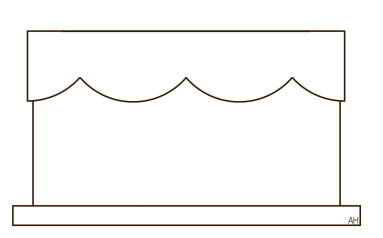
Do you want it to look like this?
Or do you want it to look like this?

Or this?


Of course they all want colorful cakes with decorations all over it. . .or DETAILS! So I have the kids decorate their cakes with details and use the word details to tell us about the details they added to their detailed cakes. Then we look at a rubric to determine how detailed our cakes are.


The students are able to add more details to score a 4 candle cake.


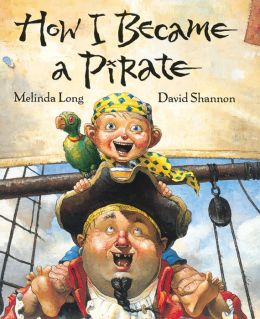
Next we apply our knowledge of details by identifying important details from the perfect book. . .


 As I read the story, we stop and discuss the important events and write them on our cakes.

 Then we add "decorations" to the cake which are actually the details the kids have written.

From there we move on to other activities to develop a deeper understanding of details and how WE can add details to our writing to make it better. Click on A Dollop of Details below to get a hold of these activities and more.
https://drive.google.com/file/d/0B4dkVYoybDGRb0E4UXlEaDdGVXc/edit?usp=sharing

Freebie Fridays


Tuesday, June 17, 2014

Five For Friday on Tuesday

I'm definitely late. Better late than never?


1. My summer read arrived! "Literacy+Math=Creative Connections in the Elementary Classroom" Is it good? I don't know. I couldn't find any reviews. We'll see!
2. I made these chocolate chip cookies for Father's Day. This is the best recipe I have found. The secret is all in the butter!


3. I finished this unit. I love teaching writing and want every teacher to love it too!
4. I'm keeping up with my 5 day a week workout. Nobody knows that it took me 10 days to finish all 5 days. . . until now. But my goal is different this week. I take one day off and I NEVER exercise on Friday. So that leaves 5 days. I'll get it done!

5.I gave this dog a bath. He hates baths, but he seems so happy after. He's either relieved it's over or happy to be clean. I wish I could read his mind. He's so cute!


Monday, June 2, 2014

Top 10 Things I've Learned as a Teacher

10. When teaching a new concept, assume students know very little about the topic.
9. Children are all the same no matter where they come from. They all want love, acceptance, and boundaries.
8. It's helpful to have Ziplock bags and lunch bags on hand at all times. You never know when you'll need them.
7. Having a good "teacher look" will save you lots of energy.
6. Engaged students are much better behaved than bored students.So if they're misbehaving, chances are, they're bored.
5. Start the year with a discussion on tattling. Let students know what tattling is and is not. There will be a lot less tattling and a lot less headaches.
4. Get to know your students. Know where they come from and their backgrounds. Some need more love and self-esteem boosting.
3. Have procedures for EVERYTHING.
2. Before letting students work independently, tell them your expectations.
1.  Breathe. They're only 7.

Thursday, May 15, 2014

Lovin' the Life Cycles

I'm not a fan of bugs so the idea of having ladybugs in my classroom didn't sit well with me. I'm over it now, I think I ended up being the one that was most fascinated by the whole process. We watched the larvae pupate, and change into ladybugs. We released the ladybugs into our garden, which ended up being a little bittersweet. Yes, they're bugs, but our class watched them grow and now it's over.


The day we released the ladybugs.
Over the past few weeks our class has been studying the ladybug and frog life cycles.  The students read two different articles to collect information about the life cycles. They took notes to help them compare and contrast, write summaries, write captions put together illustrations of the life cycles, and give a group presentation.


 Student comparing and contrasting and referring to text. Amazing!
Student poster with Venn diagram and summaries.
Student poster with life cycles. Some added their captions.
This project demonstrated the knowledge my class has learned over the course of the year. Most importantly referring to text. All year long my mantra has been, "Refer to the text." And, to my surprise, they were doing just that all on their own.

The activities were engaging and I could see the kids' curiosity and application of their knowledge. And isn't that what we really want?

Check out this unit!

Monday, May 12, 2014

Using Literature to Teach Voice

Teaching students to use voice in their writing can be a challenge. I mean even Carole, the author from The Real Housewives of NYC, claims it took her years to find her voice in writing. I actually found a bit of relief hearing this since I have so much trouble teaching voice to my kids. If an actual author has trouble, of course seven year olds will!

Back in February I came across an amazing book called The Day the Crayons Quit by Drew Daywalt. It's about a kid named Duncan whose crayons have had enough of him. The crayons felt mistreated and overworked. So each crayon writes Duncan a letter. The author writes in the voice of each crayon. He writes that the red crayon is angry for being overworked during Christmas and Valentine's Day. The orange and yellow crayons are arguing over which of them should be used to color the sun. The white crayon is upset that nobody can see him. The angry letters go on and on. The kids really enjoyed this book. After reading a few pages, I stopped showing them the pictures and let them guess the crayon color that was writing the letter.


So, as usual, the best ideas come without being planned so I decided to stop reading when I came to the pink crayon's letter. I asked the students to write in the voice of a pink crayon, which was disappointing to about half the class, but they had fun anyway. My students' writing was so creative and enjoyable to read. They had so much fun, they wrote a second letter in the voice of a color of their choice. This will definitely be a go-to writing activity each year to teach my students about voice.


Tuesday, May 6, 2014

The 6 Traits

We've all been there. Ok maybe not ALL of us, but lots of us. You get that tightness in your stomach and you become a little anxious. You try to extend your grammar lesson, but there's no getting around it, it's time for writing. If you know what I'm talking about, you know that some. . .many. . .most days you "don't have time" for writing. I'm here to tell you things can change!

It all started when I purchased this golden colored book. You may have seen it. You may have passed it up in Barnes and Noble. It is just another book on writing, right? Wrong! It's the best book out there for teaching kids to write. It has fun, creative, and engaging activities that teach kids and teachers writing can be the subject you want to start with and extend into another lesson because you just don't want to stop.
Related Posts Plugin for WordPress, Blogger...